First Round of Abstract Submission Ends: Dec 31, 2026
Extended Early Bird Ends: Aug 28, 2026
Plenary Speakers
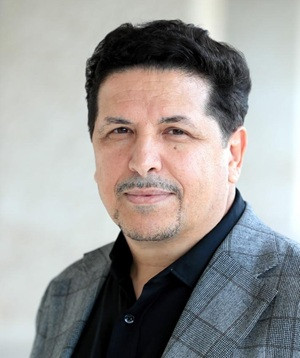
Prof. Thomas J. Vogl
Johann Wolfgang Goethe University Frankfurt, Germany
Title: To be confirmed.
Prof. Dr. Thomas Vogl, MD, is a Professor of Radiology at the University Hospital in Frankfurt with expertise in interventional oncology such as transarterial chemoembolization, transpulmonary chemoembolization, thermal ablation, vascular procedures, MDCT, MRI, evaluation of contrast agent, MR-guided procedures, subjects upon which he regularly publishes and lectures nationally and internationally. His special focus is on head and neck tumors as well as primary and secondary liver and lung tumors.
Prof. Hans J. Biersack
University of Bonn, Germany
Title: Camelid Nanobodies - A promising tool for future Medicine
Prof. Dr. med. Hans-Jurgen Biersack is a highly experienced doctor specializing in nuclear medicine. With an impressive 51 years of experience, he has a wealth of knowledge in this field. He has made significant contributions to the medical community, with 718 scientific publications to his name.
Dr. Biersack has an extensive career, including various positions at the University of Bonn, where he has worked since his residency. He has served as the Assistant Director, Professor, Chairman, Dean, and Vice Dean. He was also a Senator and Vice-Rector at the university. Notably, he has been recognized with several prestigious awards, including the Alfred Gutgemann Award and the Order of Merit from the Federal Republic of Germany.
Working at the Beta Clinic Bonn in Germany, Dr. Biersack is a respected figure in the field of nuclear medicine. His research and expertise focus on areas such as epilepsy diagnosis, brain SPECT imaging, and tumor marker evaluation. With his extensive experience and impressive track record, Dr. Biersack is considered a leading expert in nuclear medicine, making him a trusted and competent practitioner.
Prof. Lawrence L. Wald
Harvard Medical School, USA
Title: The evolving next generation of MRI hardware
Lawrence L. Wald, Ph.D., is a Professor of Radiology at Harvard Medical School and Affiliated Faculty of the Harvard-MIT Division of Health Sciences Technology and the Harvard Biophysics program. His research interests focus on MR methodology, including ultra-high-field brain imaging (7T), gradient technology for the Human Connectome project, as well as portable MRI, fast imaging, motion-mitigated MRI, and Magnetic Particle Imaging (MPI) for functional brain imaging. He has authored >350 publications and has 60 issued patents. He is a Fellow and gold medal awardee of the ISMRM, where he served as president 2019-20, and a Fellow of the American Institute for Medical and Biological Engineering (AIMBE), American Physical Society (APS), and a member of the National Academy of Inventors (NAI).
Prof. Yi Xiang Wang
The Chinese University of Hong Kong, Hong Kong
Title: Lesion diagnosis and prognosis estimation by clinical applicable diffusion magnetic resonance imaging methods
Dr. Yi-Xiang Wang is a professor at the Department of Imaging and Interventional Radiology, the Chinese University of Hong Kong.
Dr. Yi-Xiang Wang read medicine, trained in diagnostic and interventional radiology, as well as obtained a research doctorate (PhD, Shanghai Med U) in China. He did post-doctoral fellowships in Sheffield Medical School, UK, and Erasmus University, the Netherlands. Dr. Wang was with AstraZeneca Pharmaceuticals R&D (UK) as a senior scientist/associate team leader during 2001-2006. He joined the Faculty of Medicine at the Chinese University of Hong Kong in late 2006.
He is also the editor-in-Chief of Quant Imaging Med Surg journal. In recent years, his research has focused on three directions: (1) new techniques of liver MRI and diffusion MRI; (2) spine degenerative diseases; (3) bone mineral density and osteoporotic fracture. He proposed a number of new liver MRI techniques such as diffusion derived vessel density (DDVD), slow diffusion coefficient (SDC), and novel analysis of intravoxel incoherent motion parameters. His work on epidemiology of spine degeneration including disc space narrowing, spondylolisthesis, and osteoporotic fracture provides reference standard for East Asians, and also deepened the understanding of pathophysiology of spine degeneration.
He has published >400 papers, and his works have been cited (google scholar) > 27,000 times (H-index 74). https://scholar.google.com.hk/citations?hl=en&user=msnG4VQAAAAJ&view_op=list_works&sortby=pubdate
Prof. Jan W. Casselman
Dalhousie University Halifax, Canada
Title: 3D CRANI MRI of the extracranial course of the cranial nerves: anatomy & pathology
Medical formation (1976-1983) with clinical year in Republic of South Africa (Pretoria 1981) and Radiological certificate (1988) at the University of Leuven, Belgium, with fellowships at the UCLA and Gainesville University, U.S.. PhD in 1994 at the University of Ghent ,Belgium, with a thesis on imaging of the inner ear. Neuro- and Head & Neck radiologist in Bruges, Belgium, since 1988, chairman from 2004 – 2022. Consultant radiologist at the St.-Augustinus hospital in Antwerp from 1999 - 2023. Was president of the European Society of Head and Neck Radiology (ESHNR) in the period 1999-2002. Was section editor of “Neuroradiology” in the years 2006-2023 and associate editor Head and Neck Imaging for “Radiology” since 2013. He is author or co-author of 300 scientific publications with 14.100 citations – Hirsch index 63 , has given over 1400 scientific presentations in 54 different countries. He was appointed Guest-Professor in Radiology at the University of Ghent in 2011 and Academic Consultant of the University of Leuven in 2015. Received the “Gold Medal – Lifetime achievement” award of the ESHNR in London, 2018. Became honorary member of the IADMFR in 2023 (Brussels) and of the ESNR in 2024 (Paris). Received the inaugural ASHNR International Luminary Award in 2025 (Las Vegas). Is Vice-President of the Erasmus Verein since 2021. Became Full Professor at the Dalhousie University, Halifax, Canada and consultant radiologist at AZ St.-Lucas Gent, Gent, Belgium in 2023 and consultant radiologist. Special interests: temporal bone, skull base, cranial nerves, MR techniques, Cone Beam CT.
Prof. Siegfried Trattnig
Medical University of Vienna, Austria
Title: To be confirmed.
Univ. Prof. Dr. Siegfried Trattnig graduated from the University of Vienna Medical School in 1985. He trained in Radiology and subsequently served as Assistant Medical Director and Acting Medical Director for the Section of Neuroradiology in the Department of Radiology, Medical University of Vienna. He was appointed as an Associate Professor in Radiology 1993 becoming the Acting Medical Director at the Clinical Magnetic Resonance Institute at the University of Vienna. Since 2003 Prof Trattnig has the position of the Medical Director of the Centre of Excellence in high-field MR at the Medical University of Vienna. In 2010 he was appointed as a full Professor for Radiology with special focus on High field MR. Prof. Trattnig has pioneered the field of multi parametric or biochemical MR imaging of cartilage and in particular cartilage repair. Together with Stefan Marlovits he has developed the semiquantitative MR Observation of Cartilage Repair Tissue Score (MOCART) 1.0 and 2.0 which is now widely accepted by the orthopedic community and the authorities such as the FDA. Based on the results of clinical comparison studies between 3 and 7T his Center of Excellence for High Field MR was appointed as the international Reference Center for 7 Tesla by Siemens Healthcare, the leader in the ultra-high field MR.
He is or has been editorial board member of 8 scientific journals, member of 35 committees and working groups within the ISMRM, ESR, ESMRMB and the ICRS among the Executive Board member of the ESMRMB, member of the ESR Research Committee Board and Chairperson of the ESR Subcommittee Imaging Biomarker. He is an author of 648 articles in peer reviewed scientific journals and contributed to 25 scientific books. His h-Index is 82. Additionally he has held 26 peer reviewed scientific grants with a total of funding money of 14.5 Mio €, received 12 scientific awards and is a reviewer for 34 scientific journals. In 2019 he was awarded with the Senior Fellowship of the ESMRMB and in 2021 with the Senior Fellowship of the ISMRM.
Prof. Osamu Sakai
Massachusetts General Hospital, Boston, MA, USA
Title: Head and Neck Cancer Imaging: Past, Present, and Future of Diagnosis, Treatment Response, and Outcome Prediction
Will update soon.
Prof. Renata Mikołajczak
National Centre for Nuclear Research, Poland
Title: Translation of novel radiopharmaceuticals in clinical trials – challenges and perspectives
Professor Renata Mikolajczak coordinates the research activities of the Radioisotope Centre POLATOM at the National Centre for Nuclear Research in Poland, and has over 30 years’ experience in radioisotope and radiopharmaceutical development. She is a professor of medical sciences in pharmacy and holds a PhD in physics and a DSc in medical biology.
Since 2020, she has served as the Chair of the expert group, PRP Working Party – Precursors for Radiopharmaceutical Preparations, of the European Pharmacopoeia of EDQM.
She is an IAEA expert in Radiopharmacy and a member of the IAEA’s Standing Advisory Group on Nuclear Applications (SAGNA) and the Technical Working Group on Radiopharmaceutical Regulations (TWG).
Prof. Habib Zaidi
Geneva University Hospital, Switzerland
Title: Artificial intelligence-powered multimodality medical imaging
Professor Habib Zaidi is Chief physicist and head of the PET Instrumentation & Neuroimaging Laboratory at Geneva University Hospital and faculty member at the medical school of Geneva University. He is also a Professor of Medical Physics at the University of Groningen (Netherlands), Adjunct Professor of Medical Physics and Molecular Imaging at the University of Southern Denmark, Adjunct Professor of Medical Physics at Shahid Beheshti University and visiting Professor at Tehran University of Medical Sciences. He is actively involved in developing imaging solutions for cutting-edge interdisciplinary biomedical research and clinical diagnosis in addition to lecturing undergraduate and postgraduate courses on medical physics and medical imaging. His research is supported by the Swiss National Foundation, private foundations and industry (Total 8.3 M US$) and centres on hybrid imaging instrumentation (PET/CT and PET/MRI), deep learning for various imaging applications, modelling medical imaging systems using the Monte Carlo method, development of computational anatomical models and radiation dosimetry, image reconstruction, quantification and kinetic modelling techniques in emission tomography as well as statistical image analysis, and more recently on novel design of dedicated PET and PET/MRI scanners. He was guest editor for 12 special issues of peer-reviewed journals dedicated to Medical Image Segmentation, PET Instrumentation and Novel Quantitative Techniques, Computational Anthropomorphic Anatomical Models, Respiratory and Cardiac Gating in PET Imaging, Evolving medical imaging techniques, Trends in PET quantification (2 parts), PET/MRI Instrumentation and Quantitative Procedures and Clinical Applications, Nuclear Medicine Physics & Instrumentation, and Artificial Intelligenceand serves as founding Editor-in-Chief (scientific) of the British Journal of Radiology (BJR)|Open, Deputy Editor for Medical Physics, and member of the editorial board of the International Journal of Imaging Systems and Technology, International Journal of Biomedical Imaging, Clinical and Translational Imaging, American Journal of Nuclear Medicine and Molecular Imaging, Brain Imaging Methods (Frontiers in Neuroscience & Neurology), Cancer Translational Medicine and the IAEA AMPLE Platform in Medical Physics. He has been elevated to the grade of fellow of the IEEE, AIMBE and the AAPM and was elected liaison representative of the International Organization for Medical Physics (IOMP) to the World Health Organization (WHO) and member of the International Medical Physics Certification Board (IMPCB) and the Imaging Physics Committee of the American Association of Physicists in Medicine (AAPM) in addition to being affiliated to several International medical physics and nuclear medicine organisations. He is developer of physics web-based instructional modules for the RSNA and Editor of IPEM’s Nuclear Medicine web-based instructional modules. He is involved in the evaluation of research proposals for European and International granting organisations and participates in the organisation of International symposia and conferences. His academic accomplishments in the area of quantitative PET imaging have been well recognized by his peers and by the medical imaging community at large since he is a recipient of many awards and distinctions among which the prestigious 2003 Bruce Hasegawa Young Investigator Medical Imaging Science Award given by the Nuclear Medical and Imaging Sciences Technical Committee of the IEEE, the 2004 Mark Tetalman Memorial Award given by the Society of Nuclear Medicine, the 2007 Young Scientist Prize in Biological Physics given by the International Union of Pure and Applied Physics (IUPAP), the prestigious (100’000$) 2010 kuwait Prize of Applied sciences (known as the Middle Eastern Nobel Prize) given by the Kuwait Foundation for the Advancement of Sciences (KFAS) for "outstanding accomplishments in Biomedical technology", the 2013 John S. Laughlin Young Scientist Award given by the AAPM, the 2013 Vikram Sarabhai Oration Award given by the Society of Nuclear Medicine, India (SNMI), the 2015 Sir Godfrey Hounsfield Award given by the British Institute of Radiology (BIR), the 2017 IBA-Europhysics Prize given by the European Physical Society (EPS) and the 2019 Khwarizmi International Awardgiven by the Iranian Research Organization for Science and Technology (IROST). Prof. Zaidi has been an invited speaker of over 160 keynote lectures and talks at an International level, has authored over 600 publications (he is the senior or first author in a majority of these publications), including 310 peer-reviewed journal articles in prominent journals (ISI-h index=47|60 Web of Science™|Google scholar, >14’000+ citations), 280 conference proceedings and 38 book chapters and is the editor of four textbooks on Therapeutic Applications of Monte Carlo Calculations in Nuclear Medicine, Quantitative Analysis in Nuclear Medicine Imaging, Molecular Imaging of Small Animals and Computational anatomical animal models.